
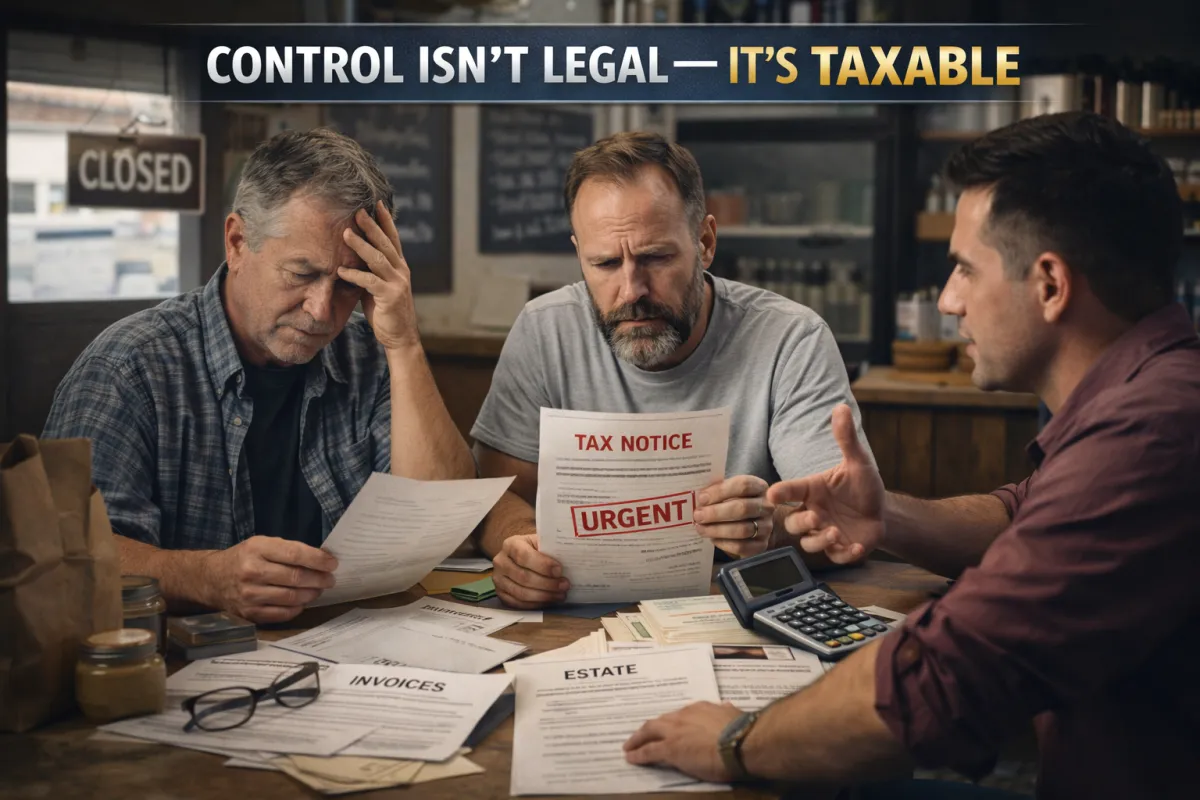
What Happens to a Business When an Owner Dies or Is Disabled
Most business owners assume things will “work themselves out.”
They won’t.
When death or disability hits without a plan, control disappears fast.
Cash flow stalls. Authority is unclear. Family members panic. Advisors scramble.
This isn’t rare, it’s the default outcome.
Here’s what actually happens, and what needs to be in place before it does.
The Immediate Problem: Loss of Control
When an owner dies or becomes disabled, the business doesn’t pause.
Banks still expect payments.
Employees still need direction.
Customers still expect delivery.
But without clear authority:
No one knows who can sign
No one knows who decides
No one knows what the plan is
That gap, even for weeks can permanently destroy value.
What Happens If the Owner Dies
Death triggers legal, tax, and operational events immediately.
Common consequences:
Deemed dispositions and unexpected tax bills
Frozen bank accounts
Share ownership transferring to unintended parties
Executors with no business experience stepping into control
If there is no coordinated plan between the will, shareholder agreements, and tax structure, decisions get made reactively and usually expensively.
What Happens If the Owner Becomes Disabled
Disability is often worse than death.
Why?
The owner is still alive, but unable to act
Authority may be unclear or legally restricted
Disagreements increase because “intent” can’t be clarified
Without proper powers of attorney and continuity planning:
The business can’t legally operate
Financing can be pulled
Key employees leave
Disability exposes weaknesses death sometimes hides.
The Tax Risk Most Owners Miss
On death, the CRA doesn’t wait.
Triggers can include:
Capital gains on shares
Loss of small business deductions
Estate liquidity shortfalls forcing asset sales
If tax planning isn’t done before death or disability, families are left funding tax liabilities at the worst possible time.
This is not aggressive tax planning.
This is basic risk control.
Why “We’ll Deal With It Later” Is the Most Expensive Decision
Most owners aren’t irresponsible, they’re busy.
But delay creates three compounding risks:
Loss of control
Loss of value
Loss of options
Once an event happens, your choices collapse to whatever documents already exist.
Planning only works before it’s needed.
What Stability Actually Looks Like
Stability doesn’t mean complexity.
It means:
Clear authority if the owner can’t act
Coordinated estate, tax, and ownership planning
Cash flow protection for the business and family
No scrambling, no guessing, no chaos
When this is done correctly, death or disability becomes a transition — not a crisis.
The Bottom Line
If you own a business and have not planned for death or disability, you are exposed, whether you realize it or not.
This isn’t about fear.
It’s about control and continuity.
The right plan doesn’t predict the future.
It removes uncertainty from it.


